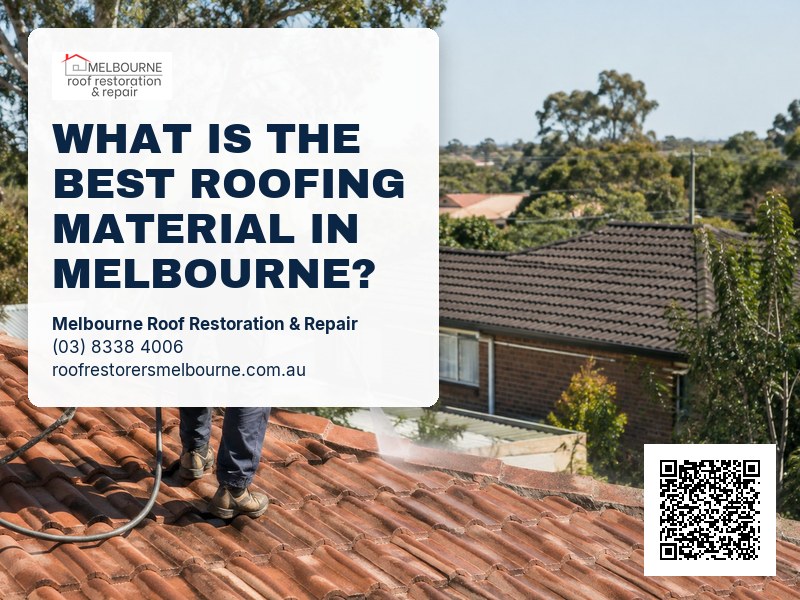
What is the best roofing material in Melbourne?

Most homeowners start thinking about roofing material when something on the roof starts to bother them: a cracked tile after a storm, faded sheeting, or a ceiling stain that wasn’t there last winter. There’s no single best roofing material for every Melbourne home. The right choice depends on what your house is built to carry, how much outside noise you deal with, and whether you’re repairing what’s already up there or changing to something new. Tiles, concrete or clay, suit plenty of homes and help quieten a noisy street. Sheet roofing is lighter. Changing from one to the other can bring council paperwork you need to know about before any work starts.
Are tiles or sheet roofing better for a Melbourne home?
Both have their place, and neither wins on every count. The honest way to decide is to look at your house, your street and your budget together.
Concrete and clay tiles have a reasonable sound-reducing effect on outside noise, according to Renew magazine’s guide to choosing roofing materials. That makes them a sensible option if you live near a main road or under a flight path. The same guide points out that both types of tile are heavier than sheet roofing materials, so they need appropriate supporting structures in the roof, which may add slightly to construction time and costs.
Sheet roofing is the lighter option. If your roof frame wasn’t built to carry tiles, sheeting is often the simpler path. If your home already has tiles and the frame is sound, staying with tiles usually makes the job more straightforward.
Is clay better than concrete?
For noise and weight, the two behave much the same. The Renew guide groups them together on both points: each gives a reasonable reduction in outside noise, and each is heavier than sheet materials. So the decision between clay and concrete tends to come down to the look you want, what matches the rest of your street, and what fits your budget once you’ve had a proper quote. Ask your roofer to explain the difference for your particular roof rather than relying on general claims.
Do I need a permit to change my roofing material?
Possibly, and this catches people out. The City of Monash explains the rule plainly: if you have a tiled roof and you replace tiles with tiles, you’re still repairing the roof, even if the new tiles are a different colour, make or size. If you put on Colorbond instead, that isn’t like-for-like, and you must have a building permit.
That guidance comes from one Melbourne council, so check with your own council before you commit to a change of material. The safe approach is simple:
- If you’re keeping the same type of material, ask whether the job counts as a repair in your area.
- If you’re switching from tiles to sheeting, or the other way round, assume you’ll need a permit until your council tells you otherwise.
- Sort out the paperwork before the old roof comes off, not halfway through the job.
Can my roof frame handle a heavier material?
Don’t assume it can. Because tiles are heavier than sheet roofing, the roof structure has to be up to carrying them. If you’re thinking about going from sheeting to tiles, get the frame checked first. Putting a heavy roof on a structure that wasn’t built for it is a safety problem, not just a cosmetic one. Going the other way, from tiles to sheeting, takes weight off the frame, but it still brings the permit question above.
Should I repair what I have or replace it?
Start with an inspection. A lot of roofs that look tired from the street only need targeted repairs: replacing broken tiles, fixing the ridge, or sealing problem spots. Repairing with the same type of material also keeps you on the like-for-like side of the permit line in councils that follow the approach Monash describes. Full replacement makes more sense when the damage is widespread, or when you’ve got a clear reason to change material, like wanting a quieter roof or needing to take weight off an older frame.
What’s the safest way to get started?
Stay off the roof yourself. Tiles crack underfoot, sheeting can be slippery, and a fall from roof height can do serious harm. Have someone experienced look at it, tell you what condition it’s really in, and talk you through your options: repair, restore, or replace, and with what material. Get any quote in writing so you know exactly what’s included.
If you’d like an honest opinion on your roof, call Melbourne Roof Restoration & Repair on (03) 8338 4006 for a quote. You can also find out more on the Melbourne Roof Restoration & Repair website.
Sources
- A roof over your head: Choosing the right roofing materials | Renew ([renew.org.au](https://renew.org.au/renew-magazine/building-materials/a-roof-over-your-head-choosing-the-right-roofing-materials/))
- Roofing | City of Monash ([monash.vic.gov.au](https://www.monash.vic.gov.au/Planning-Development/Building/Renovations/Roofing))
Top Picks
No posts